Grid compliance is an engineering problem.
AI data centers are now large loads visible to grid protection systems. The rules below define ride-through and recovery — XMight's POM implementation is designed to support site-level compliance with them.
BACKGROUND
Why these standards now
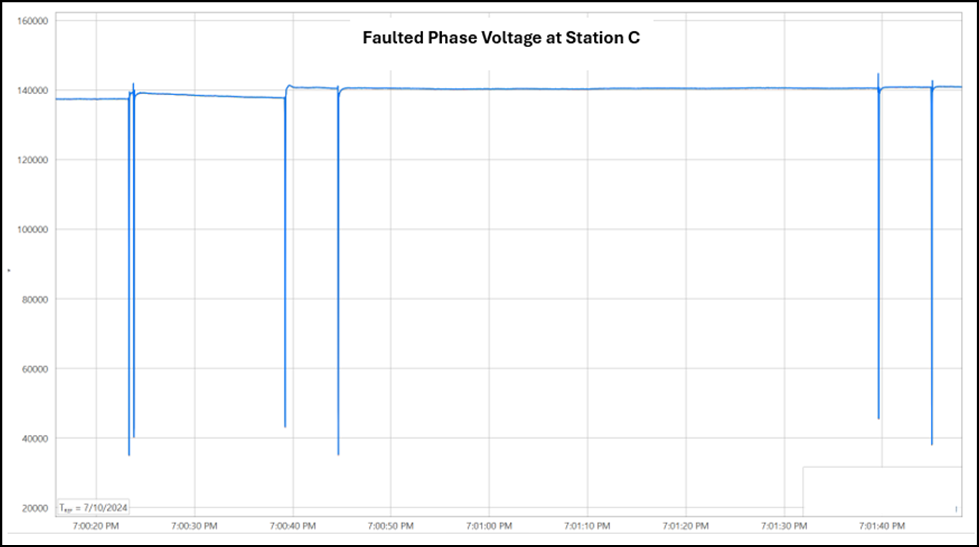
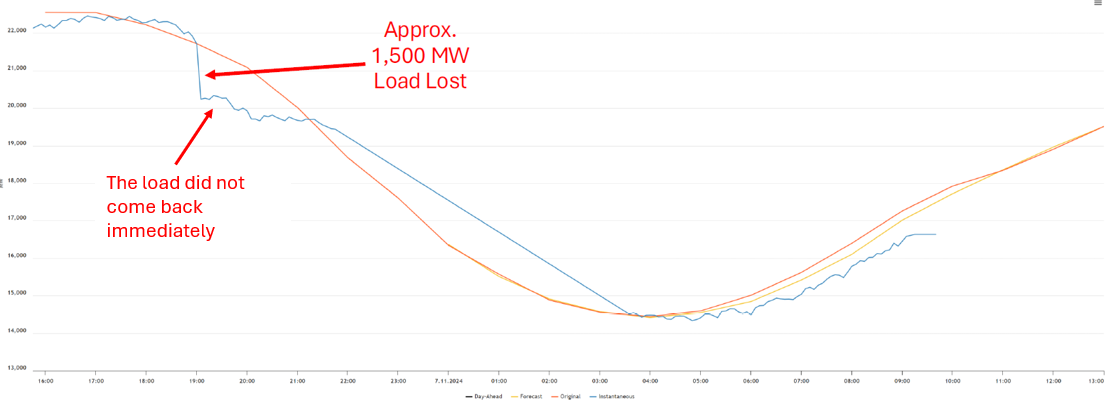
On 10 July 2024, a lightning arrester failed on a 230 kV transmission line in Northern Virginia. Automatic reclosing turned one fault into six within 82 seconds. Each fault was cleared normally, but each pulled local voltage down to 0.25–0.40 p.u. — and nearby data centers moved about 1,500 MW of load to backup power on their own. No utility equipment disconnected them. Around 1,260 MW, which left at the third dip, stayed off for hours: a common protection scheme moves a facility to backup after three disturbances within a minute and keeps it there until it is reconnected by hand.1,2
The pattern since
| When | What happened | Load |
|---|---|---|
| 10 Jul 2024 · Northern Virginia (PJM) | Six faults in 82 seconds on one 230 kV line; nearby data centers transfer to backup power.1,2 | ≈1,500 MW; most off for hours |
| 21 May 2026 · ERCOT (planning study) | ERCOT screens about 20 GW of large loads: four groups would not ride through a single three-phase fault on the 345 kV system in its 2028 planning case.4 | 5.4–6.0 GW per group could trip |
| 22 Jul 2026 · Northern Virginia (PJM) | A mechanical failure takes out one 230 kV line; data-center load transfers to backup in two steps, 67 seconds apart.3 | ≈3,800 MW — the largest load transfer PJM has recorded; back within about 30 minutes |
Regulators responded. ERCOT NOGRR 282, in force since 1 August 2026, makes voltage ride-through and post-fault active power recovery mandatory for large computational loads.6 NERC issued a Level 3 alert on computational loads in May 2026 and is developing continent-wide standards.5 Inside OCP, the Data Center Facility project published an Interface Specification Between Hyperscalers and Utility Grid for Disturbance Performance (V1.0.0, September 2026) that states the same commitment at the point of interconnection.7 The events exposed a gap between today's rack power design and grid interconnection requirements.8,9
REGULATORY REQUIREMENTS
Standards XMight's POM implementation is designed against
Post-Fault Active Power Recovery
Return to at least 90% of pre-disturbance load within 2 seconds of voltage recovery.6
ERCOT Nodal Operating Guide · NOGRR 282
XMight's POM implementation is designed to support site-level compliance with this requirement.
WHERE THIS IS HAPPENING
Selected large-load ride-through initiatives.
ERCOT NOGRR 282 is in force. The others are at different stages, from draft to adopted.10
| Region | Authority / TSO | Regulation | Timeline |
|---|---|---|---|
| US / Canada — continent-wide | NERC | Reliability Guideline (May 2026, voluntary) + Project 2026-02 standards | Guideline May 2026 · mandatory standards due to FERC by 31 Dec 2026 (RD26-7-000) |
| US — Texas | ERCOT | NOGRR 282 + NPRR 1308 | In force since 2026/08 · 0.50–0.80 p.u. continued-consumption step-up 2028/01 |
| US — California | CAISO | Large Loads Technical Requirements (Stakeholder WG) | Issue Paper 2026-01 · Straw Proposal April 2026 |
| US — Virginia | Dominion Energy | Facility Interconnection Reqs. | In effect (case-by-case) |
| US — Central | SPP | RR 696 (HILL) + HILL FRT v1.0 | RR 696 approved 2025/9 · FRT v1.0 2025/8 |
| Canada — Ontario | IESO | TR for Large Computational Loads v1.0 | Published 2026-05-01 · stakeholder feedback to 2026-05-28 |
| Ireland | EirGrid + SONI | MPID345 Grid Code Mod. (draft) | Draft 2025/11 · Rollout 2026 – 2028 |
| Germany | VDE FNN | VDE-AR-N 4130 + A1 amendment | A1 draft 2025/10–11 (revising) |
| Australia | AEMC + AEMO | Draft Rule (Large IBL ≥ 30 MW) | Final rule mid-2026 |